
Education Through VR: Transforming How We Learn
The landscape of education is evolving at an unprecedented pace. Traditional classroom methods—lectures, textbooks, and passive note-taking—are increasingly being supplemented or replaced by immersive digital experiences. Among these, virtual reality (VR) is emerging as a powerful tool that not only captivates learners but significantly enhances information retention.
Virtual reality transforms passive learning into active participation. Instead of reading about historical events or scientific concepts, students can inhabit these environments, interact with elements, and experience complex processes firsthand. This shift from theoretical to experiential learning has profound implications for retention rates, comprehension, and learner engagement.

The Science of Retention in VR
Studies consistently show that immersive learning enhances memory retention. When learners interact with three-dimensional simulations, they engage multiple senses simultaneously, strengthening neural pathways that facilitate recall. Unlike traditional lectures where attention can drift, VR captures and maintains focus through interactivity, challenge, and novelty.
Consider a biology student exploring the human circulatory system in VR. Traditional learning might involve memorizing diagrams and reading about blood flow, which relies heavily on rote memorization. In contrast, a VR experience allows the student to navigate the heart chambers, follow a red blood cell on its journey, and manipulate the environment to observe cause and effect. This hands-on approach not only makes the material more engaging but reinforces memory retention through experience.
Moreover, VR offers immediate feedback and adaptive learning paths. Learners can experiment, make mistakes, and correct them in real-time, cementing understanding in a way that textbooks and lectures cannot match. This interactivity aligns with cognitive science principles that suggest experiential learning dramatically increases long-term retention.
Beyond Retention: Engagement and Motivation
Retention rates are just one aspect of VR’s educational impact. Engagement is equally crucial, and here, VR has a distinct advantage. Immersive learning environments turn abstract concepts into tangible experiences, making lessons more compelling and enjoyable.
Gamification elements in VR—such as points, progress tracking, and challenges—further motivate learners. This engagement translates directly to retention: when learners are emotionally invested, they are more likely to internalize information. The novelty of VR also combats the monotony often associated with traditional classrooms, maintaining curiosity and excitement.
Addressing Diverse Learning Styles
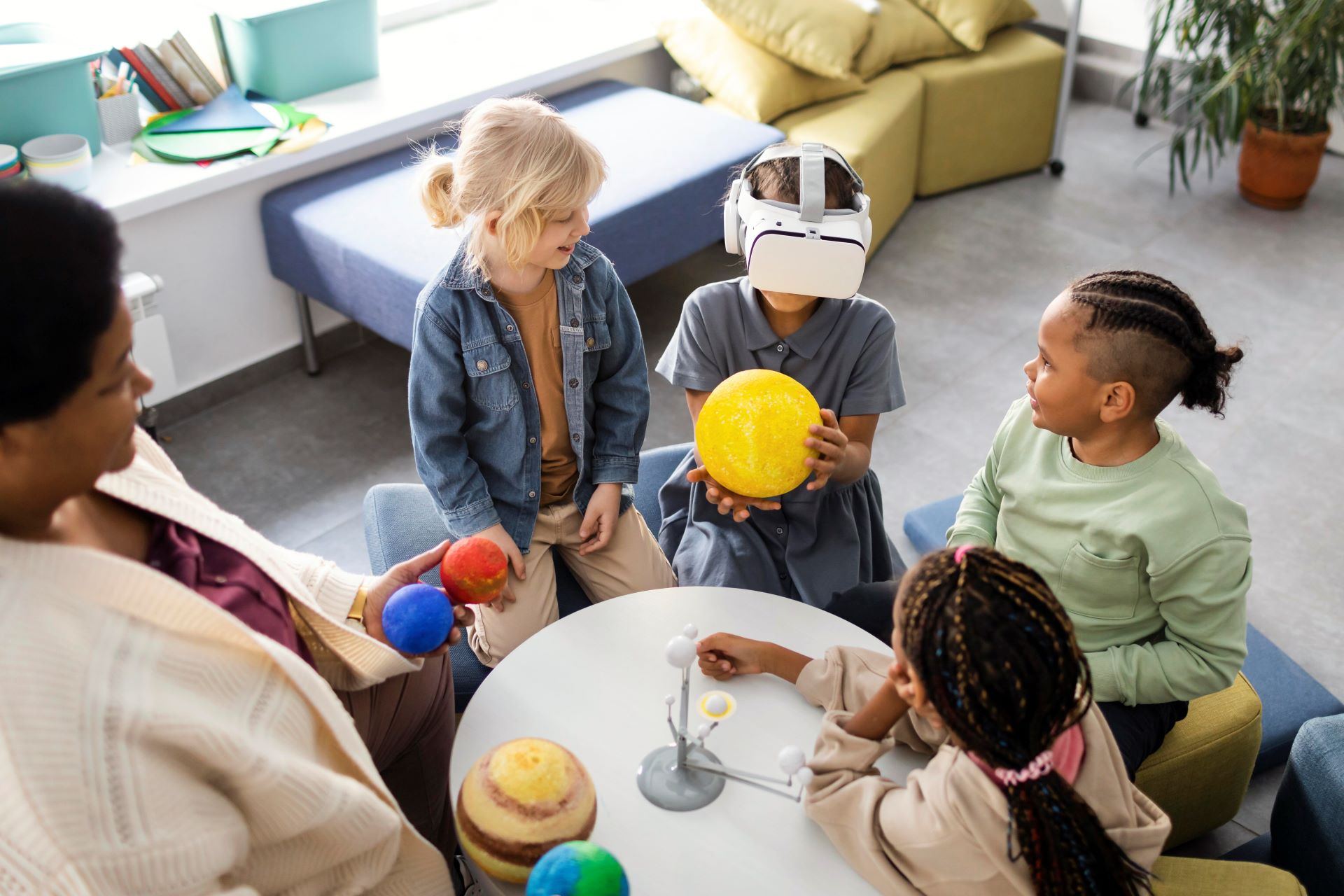
One of the challenges in traditional education is catering to diverse learning styles. While some students excel through reading and lectures, others thrive through visual, auditory, or kinesthetic experiences. VR inherently supports multiple learning modalities simultaneously.
Visual learners benefit from realistic simulations, auditory learners from spatial audio cues, and kinesthetic learners from interactive tasks. By creating a multisensory environment, VR accommodates differences in cognitive processing, ensuring that more students achieve mastery and retain knowledge.
The Role of VR in Professional and Technical Training
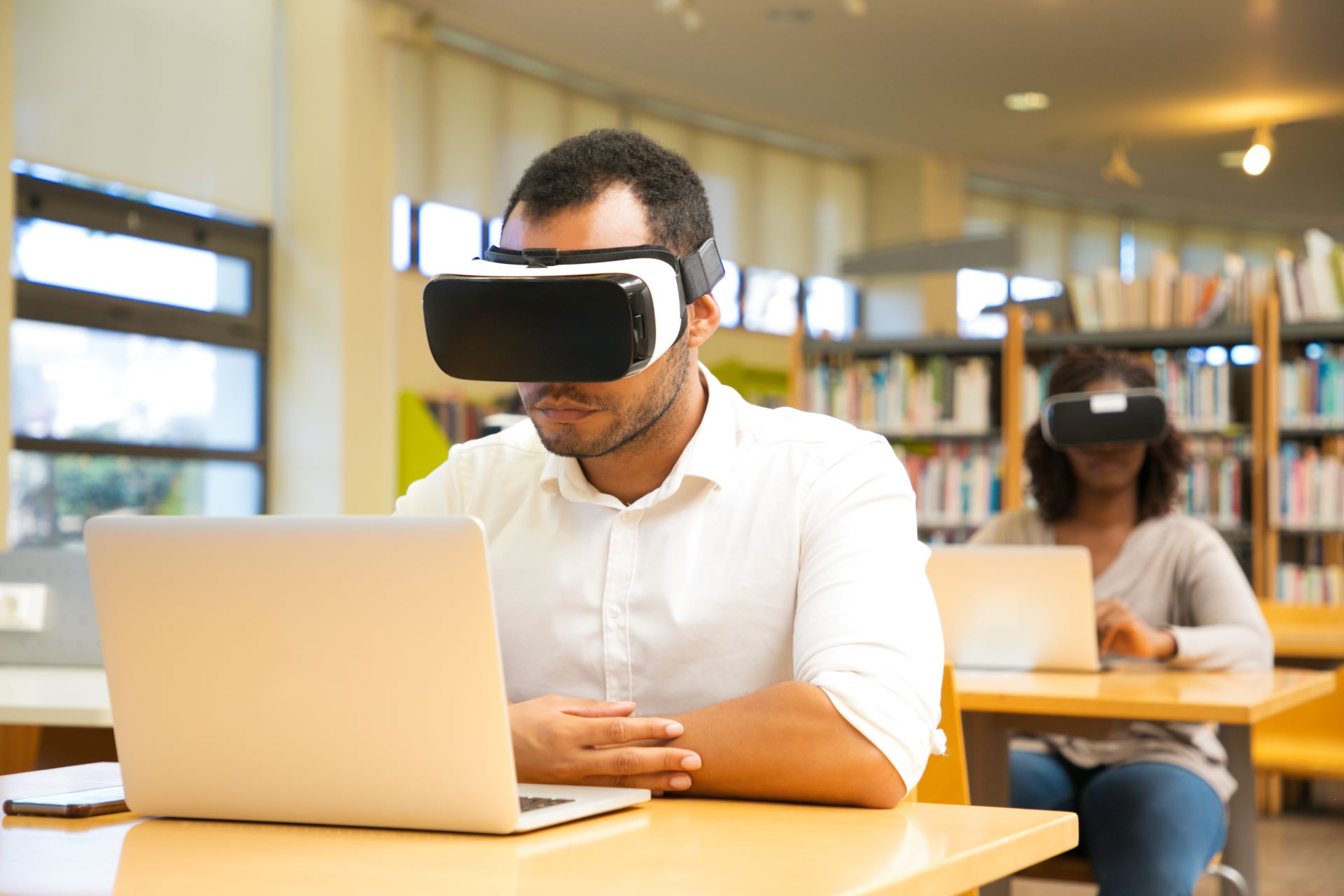
VR is not limited to academic settings. Professional and technical training programs leverage VR to simulate high-stakes environments where mistakes in the real world can be costly or dangerous. For example, medical students can perform virtual surgeries, engineering trainees can operate complex machinery, and pilots can navigate simulated flight scenarios.
These immersive simulations have been shown to improve both skill acquisition and memory retention. Unlike classroom lectures or video demonstrations, VR training allows repeated practice in a safe, controlled environment. Trainees internalize procedures through experience, making them more confident and competent when transitioning to real-world applications.
Challenges and Limitations
Despite its promise, VR in education is not without challenges. High-quality VR hardware can be expensive, and schools or institutions may face budgetary constraints. Additionally, designing effective educational VR content requires interdisciplinary collaboration between educators, designers, and VR developers.
Another consideration is the learning curve associated with VR technology itself. Students and instructors may need orientation to navigate virtual environments effectively, and accessibility remains a concern for learners with certain physical or cognitive disabilities.
However, these challenges are gradually being mitigated through advancements in hardware affordability, intuitive software design, and adaptive learning features. The growing evidence of improved retention and engagement continues to drive adoption across education sectors worldwide.
Comparing VR and Traditional Learning Outcomes
When comparing VR to conventional learning methods, retention rates are often significantly higher in immersive environments. Traditional lectures may produce retention rates as low as 10–20% over time, depending on complexity and engagement. VR-based learning experiences, on the other hand, can boost retention rates to 75% or higher by promoting active participation and multisensory reinforcement.
The benefits extend beyond memorization. VR encourages critical thinking, problem-solving, and decision-making within realistic contexts, preparing learners to apply knowledge practically. This holistic approach to education addresses the limitations of traditional methods that emphasize passive absorption rather than active engagement.
The Future of VR in Education
Looking forward, the integration of VR into mainstream education is poised to expand. Advances in artificial intelligence, adaptive learning algorithms, and collaborative virtual environments will make VR learning increasingly personalized, efficient, and scalable. Classrooms may evolve into hybrid spaces where students alternate between physical and virtual learning environments, maximizing retention and engagement.
For educators, VR offers a transformative toolkit that complements traditional methods rather than replacing them entirely. By blending immersive experiences with lectures, readings, and discussions, institutions can create enriched learning ecosystems that foster curiosity, mastery, and long-term knowledge retention.
Virtual reality is more than a technological novelty—it represents a fundamental shift in how we learn. By transforming passive consumption into active exploration, VR enhances retention, engagement, and skill development across academic and professional domains. While challenges remain, the potential of VR to complement or even surpass traditional educational methods makes it a critical frontier in the evolution of learning.