

Virtual reality has long promised a digital escape, yet true immersion requires more than just visuals and sound. Haptic feedback—the technology that lets users feel the virtual world—adds a tangible layer to VR experiences, turning passive observation into active sensation. This convergence of touch, motion, and reaction is reshaping the way we perceive and interact with digital environments.

Understanding Haptic Feedback
At its core, haptic feedback mimics the sense of touch through technology. It can be as subtle as a vibration in a controller or as complex as full-body suits capable of simulating textures, pressure, and impact. By stimulating the skin, muscles, and nerves, haptics transform VR from a primarily visual medium into a multisensory experience. This sense of presence—the feeling that you are truly ‘there’—is crucial for immersive gameplay, training simulations, and even virtual social interactions.
Haptic systems can be categorized by their method of delivery. Tactile feedback relies on vibrations and forces applied to the skin. Kinesthetic feedback simulates motion and weight, allowing users to feel resistance, tension, or impact. More advanced systems combine both, creating a layered experience that can trick the brain into believing virtual objects have mass, texture, and temperature.
From Controllers to Gloves
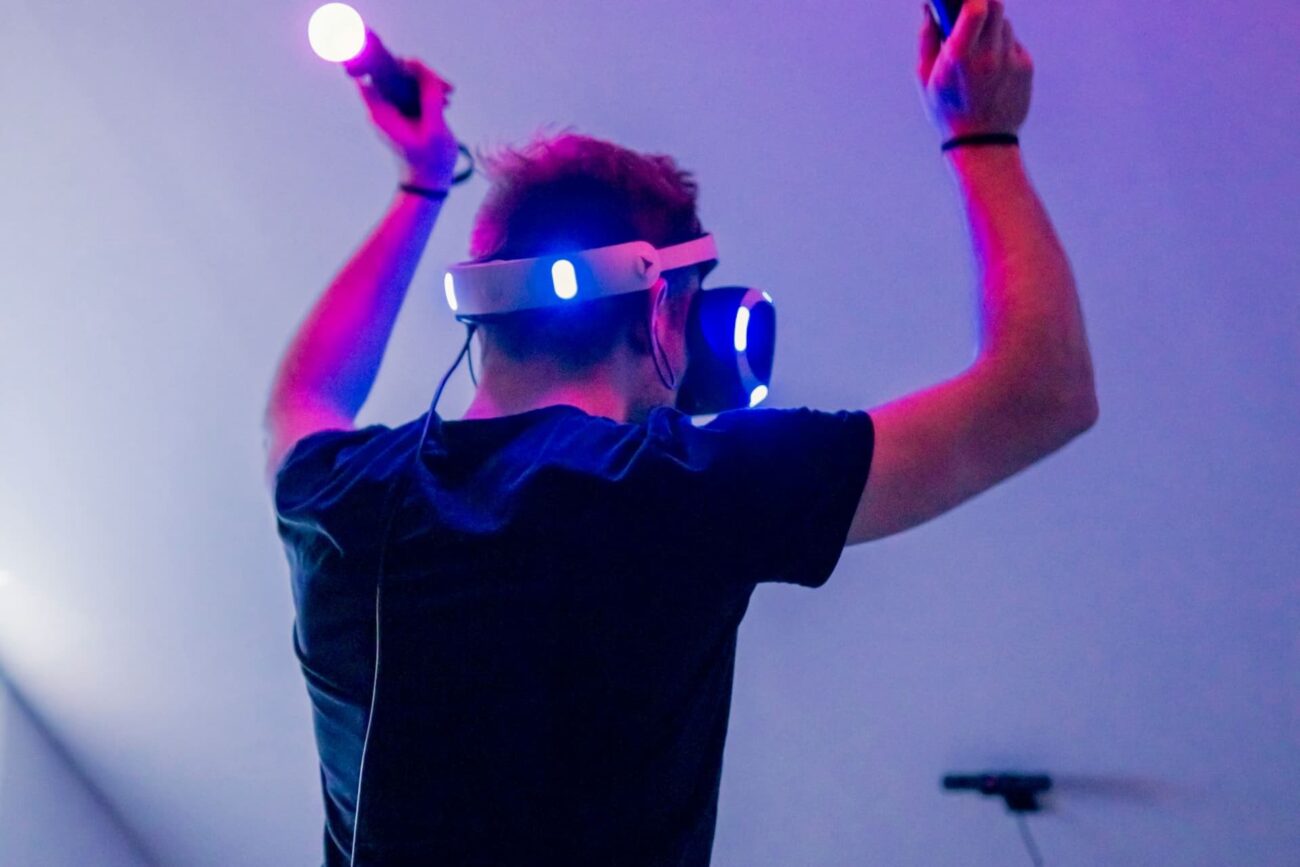
The most common form of haptic feedback arrives through VR controllers. Small actuators inside the devices create vibrations that correspond with in-game actions—a sword clash, a gunshot, or the touch of a virtual button. While simple, these signals provide a satisfying connection between movement and sensation, reinforcing the illusion of physical interaction.
VR gloves push this interaction further, delivering precise feedback directly to each finger. Equipped with arrays of sensors and actuators, these gloves allow users to grasp, pinch, or feel textures in the virtual world. The technology can simulate the hardness of a rock, the softness of fabric, or even the subtle resistance of pulling a trigger. Such gloves are particularly valuable in training simulations for medicine, engineering, and complex machinery, where tactile accuracy is essential.
Full-Body Suits: Immersion Amplified
Haptic suits extend sensation to the entire body, enabling users to feel impacts, vibrations, or environmental effects across their chest, back, and limbs. These suits use a network of actuators that respond to in-game events, such as a virtual explosion or the sensation of wind. The result is a heightened sense of realism, as users perceive virtual interactions in a manner that mimics real-life bodily responses.
Some suits integrate temperature simulation, allowing users to feel warmth from sunlight or the chill of a virtual winter scene. Others incorporate motion assistance or resistance, making physical interactions in VR more convincing. While still largely experimental and expensive, full-body haptics represent the pinnacle of tactile immersion.
Applications Beyond Gaming
While gaming is the most visible use of haptic feedback, the technology’s potential extends far beyond entertainment. Medical training can leverage haptics for realistic surgical simulations, helping students develop precise motor skills without risk to patients. Industrial and military simulations use haptic systems to replicate high-stakes scenarios safely, while architectural and design applications allow virtual manipulation of materials with lifelike tactile feedback.
Haptic feedback also has a social dimension. VR meeting platforms increasingly explore ways for users to feel handshakes, taps on the shoulder, or even hugs, creating more natural interactions in virtual spaces. As remote collaboration becomes common, these subtle cues can foster empathy and human connection across digital distances.
Challenges and Limitations
Despite its promise, haptic feedback in VR faces technological and practical challenges. Devices can be expensive, bulky, and difficult to calibrate accurately. Achieving realistic sensations requires precise synchronization between visual, auditory, and tactile stimuli. Latency or misalignment can break immersion, leaving users feeling disoriented.
Moreover, the human sense of touch is incredibly nuanced. Replicating the full spectrum of textures, pressures, and temperatures in a compact wearable remains a formidable engineering challenge. However, incremental advances—such as more sensitive actuators, improved materials, and AI-driven feedback—are steadily closing the gap between virtual and physical touch.
The Future of Haptic Immersion
The evolution of haptic feedback is closely tied to VR’s broader growth. As devices become lighter, wireless, and more affordable, haptic systems will likely become standard in consumer VR setups. Integration with AI and machine learning could enable adaptive haptics, where sensations adjust dynamically based on user behavior or environmental context.
In the long term, haptic feedback may enable fully embodied virtual experiences, where the brain cannot easily distinguish between real and simulated touch. This opens possibilities for entirely new forms of entertainment, education, and social interaction, transforming VR from a visual spectacle into a genuinely multisensory realm.

Haptic feedback is the bridge between seeing and feeling in virtual reality. Through vibrations, gloves, and full-body suits, users can experience a sense of presence that transcends the visual screen. The technology is still evolving, yet its impact on immersion is undeniable. As VR continues to grow, haptics will remain a cornerstone of creating experiences that not only look real but feel profoundly real, allowing users to touch the virtual in ways once thought impossible.