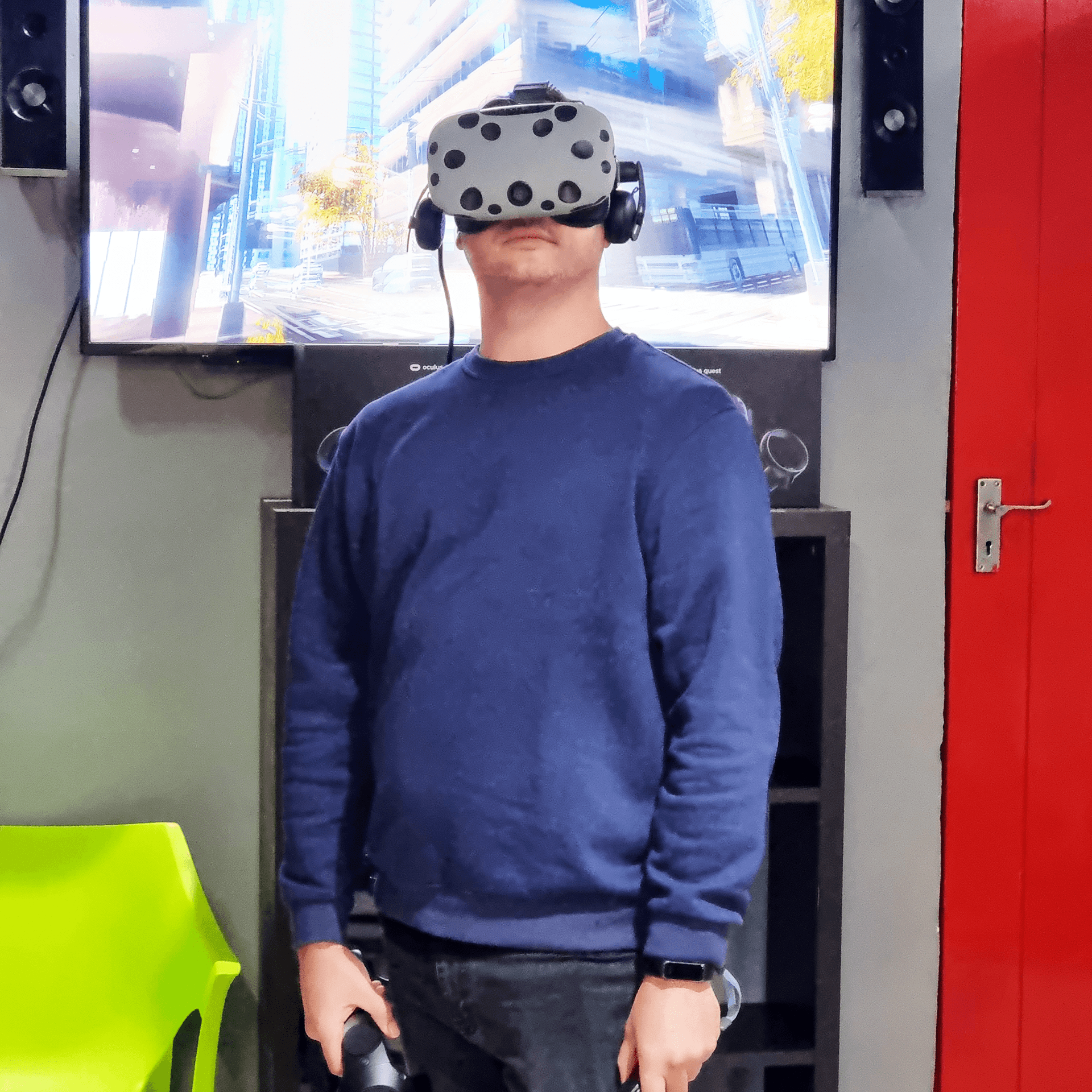
Virtual reality
VR places the participant in an immersive environment viewed through a headset. Head and controller tracking can let them look around, move and interact with the experience.

Your next experience starts here
From unforgettable VR events to custom virtual and augmented reality applications. Let’s build your next experience together.

Virtual reality. Augmented reality. Shared possibilities.
Create digital places people can explore, learn and connect in. Mixed Reality South Africa develops virtual and augmented reality experiences, bringing together immersive content, interaction and the possibilities of shared virtual worlds.
01 / Understanding the metaverse
The metaverse describes a vision of connected digital spaces where people can interact with environments, content and one another. At its heart is the idea of participation: meeting as avatars, exploring together or collaborating around a shared activity.
VR and AR offer different ways into immersive experiences. The practical starting point is the experience itself—who it is for, what people should be able to do, and how they will access it. A useful application begins with those questions, then brings the technology and content together.
02 / The building blocks
The foundation of the metaverse rests on three core technical pillars that bring digital worlds and physical spaces together.
Step inside a digital world
VR places the participant in an immersive environment viewed through a headset. Head and controller tracking can let them look around, move and interact with the experience.
Add to the world around you
AR places digital content alongside the physical surroundings. It can bring a model, visual explanation or interactive element into the space a person already occupies.
Bring people into the same space
Connected applications allow multiple people to participate together. Avatars, communication and shared objects help turn an individual experience into a social one.
03 / What people can do
Shared virtual worlds offer a setting for social, educational, business and entertainment experiences. Each one needs content and interaction designed around its audience.

Shared environments bring people, 3D assets and interaction into the same virtual space.
Create a shared setting where people can meet, talk and explore together. Avatars give participants a presence in the environment, while interaction makes the space feel more like a place to visit.
Bring learners into an environment where they can explore an idea or work through an activity together. Immersive content can put the subject around the participant and make learning more hands-on.
Use a shared virtual space for meetings, demonstrations and conversations around 3D content. The experience can bring people together around the same idea even when they are in different locations.
Build interactive worlds, activities and adventures that people can enjoy together. The environment, gameplay and social interaction work together to give visitors a reason to participate.
04 / From research to new devices
Our original 2022 article explored Meta’s research into immersive hardware. The video below accompanies that earlier discussion; these milestones put its project names into context.
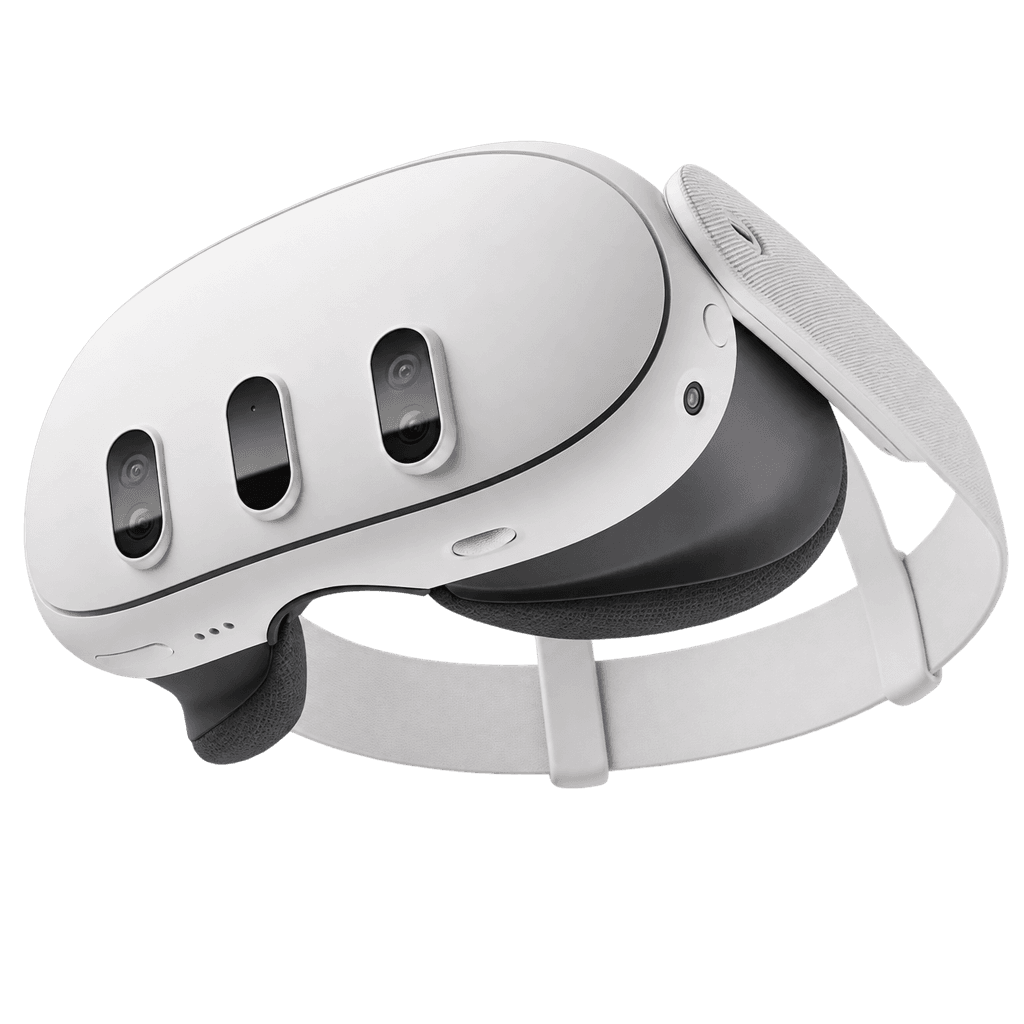
Explore our headset guideWearable AR & Egocentric AI
Meta introduced Project Aria in 2020 as a research platform to understand the sensors, spatial audio and machine perception needed for future augmented reality glasses.
Mixed Reality & Eye Tracking
Unveiled as Meta Quest Pro in October 2022. It pioneered high-resolution colour passthrough, eye tracking and facial expression sensors for social presence in VR.
True Augmented Reality Glasses
Meta unveiled Orion in September 2024, the breakthrough AR glasses prototype combining holographic digital content seamlessly with the physical world via a neural wristband.